Steam reforming is a widely used method of hydrogen production
by Admin
Posted on 13-05-2024 01:30 PM

When
hydrogen
is combusted, it does not produce carbon emissions, but it does produce nox emissions up to six times worse than those released by methane combustion. Nox can cause serious health effects , including asthma and increased chance of respiratory infections; nox is also a precursor to particulate matter and ozone, which harm the respiratory system. While there are methods of controlling nox emissions at gas power plants, those technologies are only effective at controlling nox at a blend of 30 percent hydrogen or less. Hydrogen used in fuel cells does not result in carbon emissions, only electricity, water, and heat.
Main article: hydrogen production many methods exist for producing h2, but three dominate commercially: steam reforming often coupled to water-gas shift, partial oxidation of hydrocarbons, and water electrolysis.
Industrial production of molecular hydrogen hydrogen gas is produced by several industrial methods. Nearly all of the world's current supply of hydrogen is created from fossil fuels. :1 most hydrogen is gray hydrogen made through steam methane reforming. In this process, hydrogen is produced from a chemical reaction between steam and methane , the main component of natural gas. Producing one tonne of hydrogen through this process emits 6. 6–9. 3 tonnes of carbon dioxide. When carbon capture and storage is used to remove a large fraction of these emissions, the product is known as blue hydrogen.
Hydrogen is used in industrial processes
Hydrogen is the lightest chemical element and the most abundant chemical substance in the universe. Using fossil fuels or clean electricity, we can produce hydrogen gas, which can be stored, transported, and burned to provide power.
Unlike most fuels, hydrogen does not produce the greenhouse gas carbon dioxide (co2) when burned: instead, it yields water. This means that burning hydrogen fuel does not contribute to climate change. The versatility of hydrogen fuel creates many opportunities to replace fossil fuels in different parts of our economy. It can provide long-term energy storage for the electric power sector, fuel for heavy duty transportation, and heat for industrial processes requiring high temperatures, like steel or concrete production.
Hydrogen can also be used as a fuel to power energy-intensive industrial processes, such as metal processing and glass manufacturing. Heavy industry has a challenging decarbonization journey ahead of it, accounting for nearly 40% of the world’s final energy use in 2021. Hydrogen is likely to be an important tool for replacing fossil fuels in hard-to-abate industry, many processes of which are difficult to be electrified. Initiatives are already underway - steel manufacturer arcelormittal is developing industrial-scale production and use of direct reduced iron (dri) made with 100% hydrogen.
Subscribe to the e360 newsletter for weekly updates delivered to your inbox. Sign up. But are such claims well-founded? will tapping the hydrogen be economic? and is there an environmental downside? hydrogen is increasingly seen as a potential substitute for conventional fossil fuels, especially in energy-intensive processes that cannot easily be fueled by electricity, such as blast furnaces, cement works, and industrial heating, and long-distance aviation and shipping. U. S. Energy secretary jennifer granholm has called it a “game changer [for] delivering a net-zero economy by 2050. ”but until now hydrogen has had to be manufactured, usually by separating it from methane, which requires lots of energy.
The hydrogen economy is an umbrella term for the roles hydrogen can play alongside low-carbon electricity to reduce emissions of greenhouse gases. The aim is to reduce emissions where cheaper and more energy-efficient clean solutions are not available. In this context, hydrogen economy encompasses the production of hydrogen and the use of hydrogen in ways that contribute to phasing-out fossil fuels and limiting climate change. Hydrogen can be produced by several means. Most hydrogen produced today is gray hydrogen, made from natural gas through steam methane reforming (smr). This process accounted for 1. 8% of global greenhouse gas emissions in 2021.
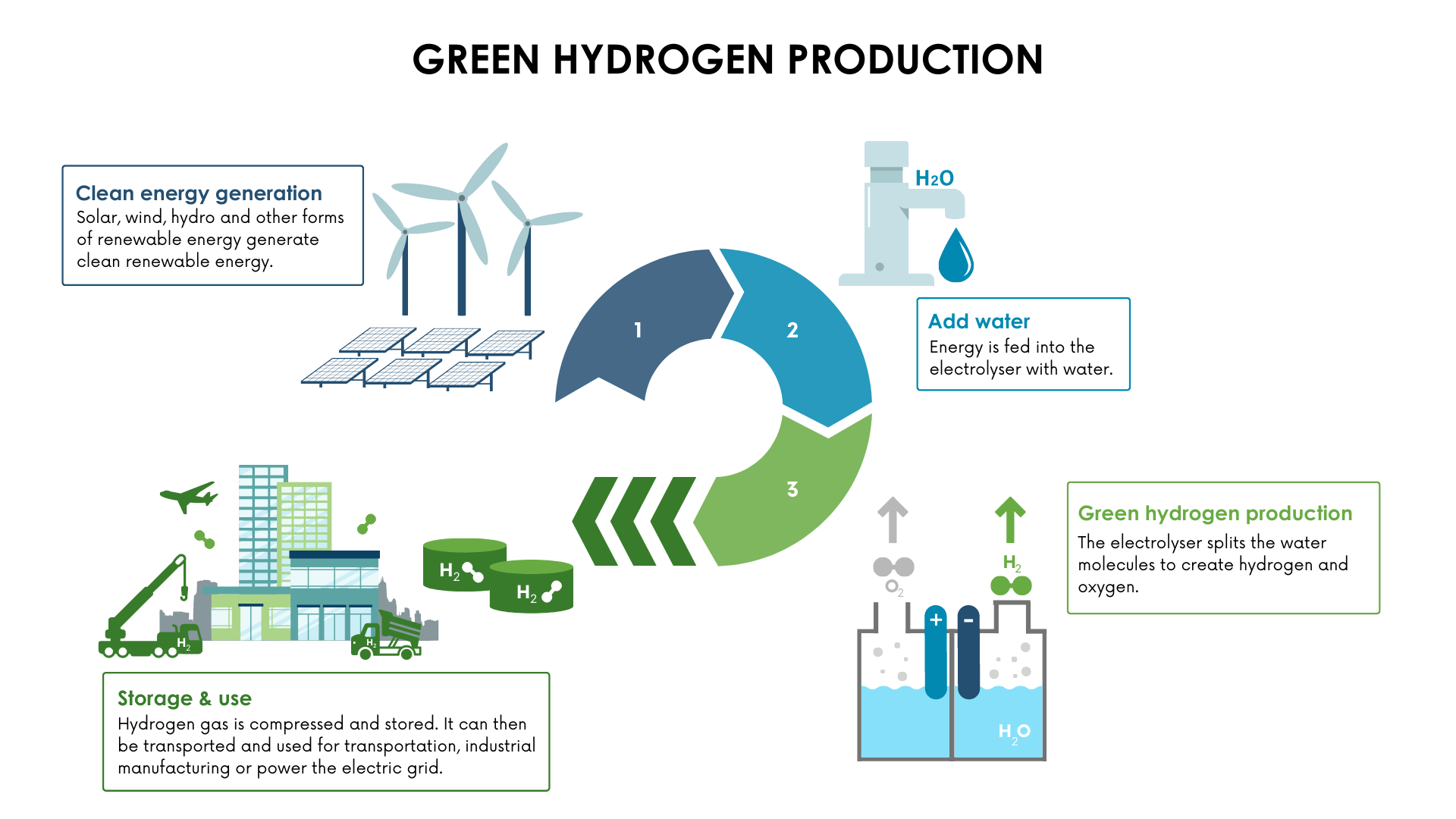
Green hydrogen—or hydrogen produced without emissions—is produced using renewable energy, like wind or solar power. The electricity generated using renewable energy can then be used to separate water molecules (h₂o) into hydrogen and oxygen gas (h₂ + o₂) in a process called electrolysis. Since the hydrogen is produced using renewable energy and the fuel produces no emissions, the hydrogen is considered a “green” energy.
Our modern life relies on electricity: the number of electric vehicles is increasing. Digitization is advancing, and buildings as well as industrial facilities are becoming increasingly electrified. So hydrogen is essentially the key to our future as it will become a decisive factor for ensuring a steady energy supply. It can replace fossil fuels across the board, including energy-intensive industries. Hydrogen is produced in electrolyzers. They use electricity to break down water into hydrogen and oxygen. Combustion occurs in reverse order: oxygen and hydrogen react to release energy. All that remains is water. This technology thus provides answers to pressing issues in the struggle against climate change — from decarbonization through to safeguarding our power supply by means of green energy.